Research vessels are essential. But they can't be everywhere, and they can't stay indefinitely.
Seasonal transitions, winter dynamics, storm events – the ocean doesn't pause between survey windows. Sailbuoy fills the gaps: a wind-powered autonomous surface vehicle, USV, that collects oceanographic data continuously, for weeks or months at a time, and transmits results in real time via satellite.
Ship time is expensive, weather-dependent, and finite. A research vessel gives you data from a specific window, in a specific area, at a specific time. Between cruises, conditions change. Populations shift. Seasonal patterns unfold without a sensor in the water.
The result is a persistent observational gap – not because the science isn't there, but because the tools to close it haven't been practical. Until recently.
What if you could maintain echo sounder coverage, CTD profiles, or biogeochemical measurements on your study site for months at a time – without tying up a vessel or crew?
Sailbuoy makes sustained, autonomous data collection operationally and financially viable for research programmes that previously had to work around vessel availability.
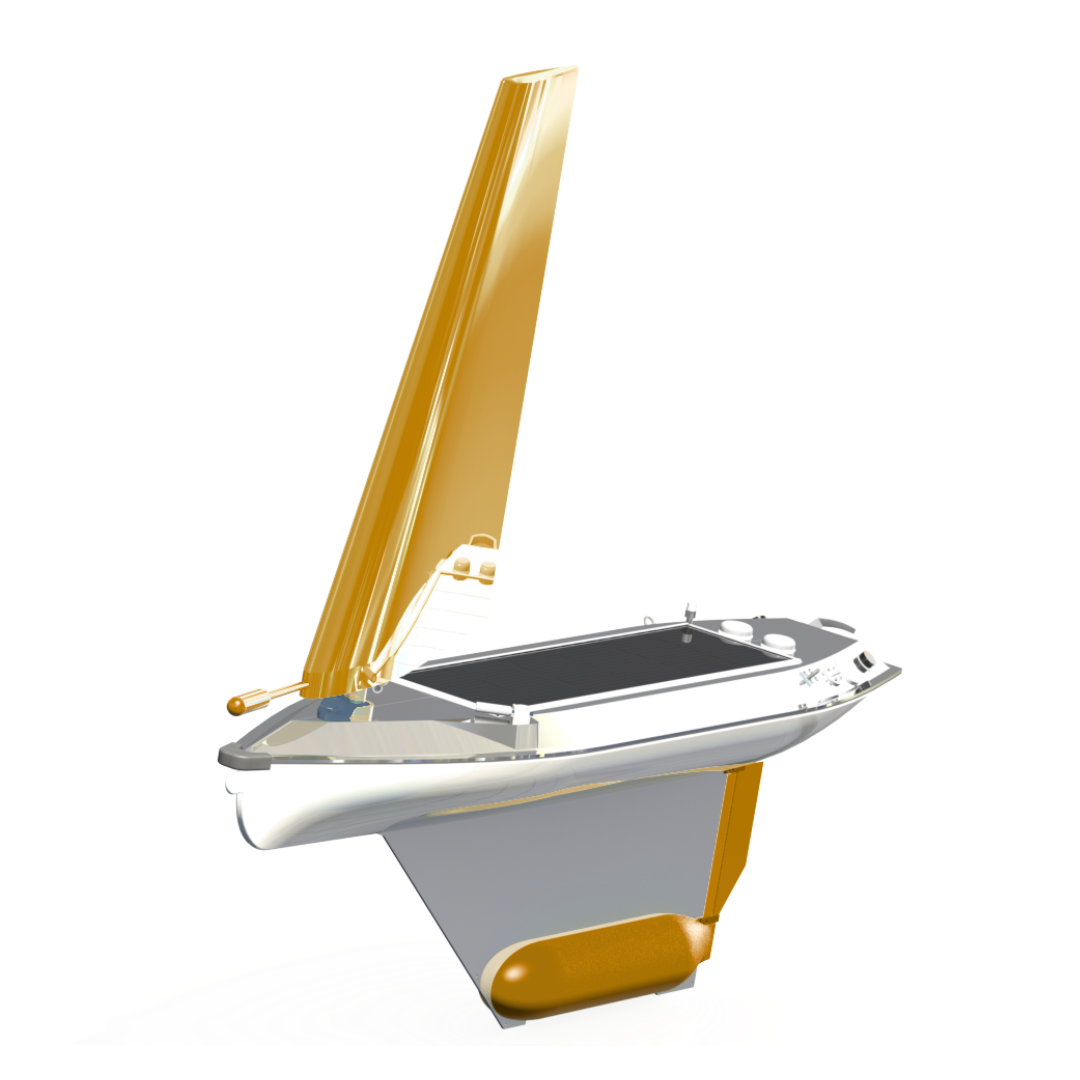
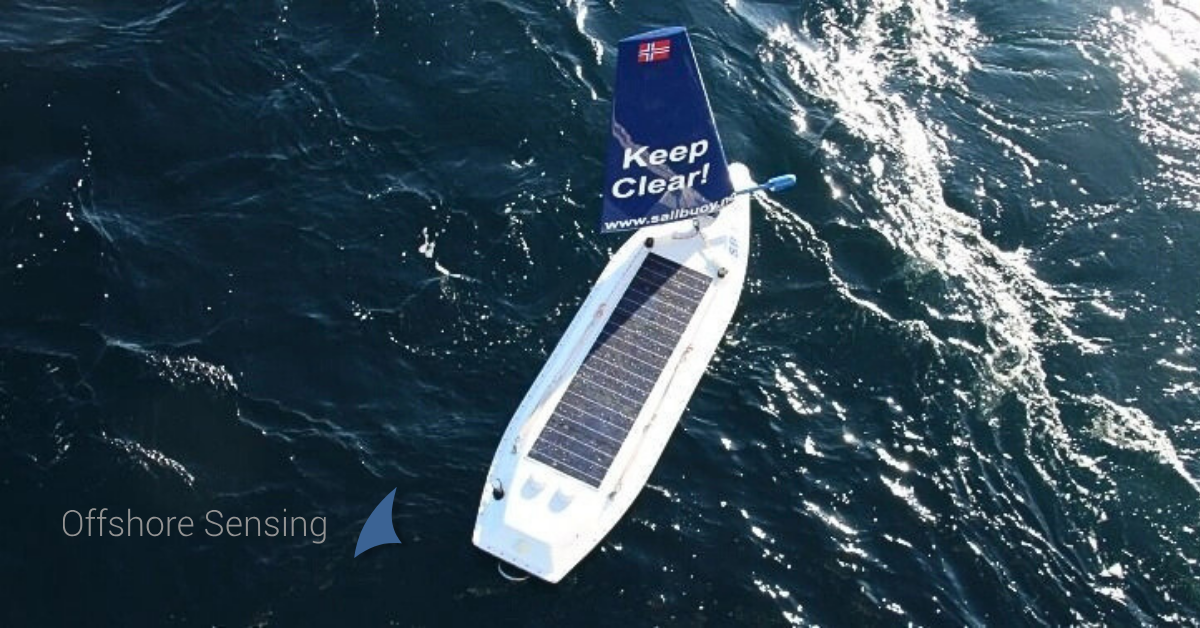
Sailbuoy is a wind-powered autonomous unmanned surface vessel (USV), 2 metres long and approximately 60 kg. It carries up to 10 kg of scientific sensor payload and operates autonomously for up to 12 months. Power for onboard electronics comes from a 30W solar system with battery backup.
Data is transmitted in real time via Iridium satellite. Mission parameters – including routing and sensor configuration – can be adjusted remotely during deployment.
No fuel. No crew. No emissions during operation.
The platform deploys from any vessel with a small crane, or by hand from shore. It ships in a standard transport case suitable for air freight.
Sailbuoy supports a wide range of scientific instruments – from echo sounders and CTDs to biogeochemical sensors and acoustic modems. The modular payload system means each deployment can be configured for the specific research questions at hand.
Data is logged onboard throughout the mission and transmitted via satellite in reduced form during operation. When the mission is complete, the full-resolution dataset is downloaded and delivered in formats compatible with standard oceanographic analysis tools.
Are you interested in seeing a Sailbuoy configured for your research programme? Explore the sensor modules below.
The most documented research application of Sailbuoy to date is a five-year programme run by the Swedish University of Agricultural Sciences (SLU) in the Baltic Sea.
SLU researcher Jonas Hentati-Sundberg needed a way to study pelagic fish dynamics around Stora Karlsö – continuously, across seasons, and over multiple years. Vessel-based surveys could cover specific windows, but couldn't provide the temporal resolution the research required. Between cruises, fish moved, seasons changed, and ecosystem dynamics continued unobserved.
Sailbuoy was deployed with an echosounder to collect acoustic data on fish distribution and biomass in the water column. The platform ran alongside vessel-based survey programmes, extending coverage into periods and conditions that crewed missions couldn't economically reach.
Over five years (2019–2023), the programme accumulated more than 500 operational days of continuous acoustic data collection. Processed hydroacoustic datasets are publicly available via the Swedish Research Data Portal.
In 2024, Hentati-Sundberg extended the programme to new territory: the first acoustic survey of Hudson Bay Arctic marine ecosystems, using Sailbuoy as the primary data collection platform.
"Sailbuoy is flexible, versatile, robust and easy to operate. Its low operating cost allows for extended deployments that complement vessel-based surveys. With over 500 operation days over the last 5 years, we have learned a lot about dynamics of pelagic fish in marine ecosystems."
— Jonas Hentati-Sundberg, PhD, Associate Professor, SLU
Institution: Swedish University of Agricultural Sciences (SLU)
Deployment area: Baltic Sea (Stora Karlsö) and Hudson Bay Arctic
Duration: 500+ operational days, 2019–2023
Configuration: Simrad EK80 echosounder for pelagic fish and biomass monitoring
Outcome: Extended seasonal coverage, publicly available hydroacoustic datasets, expanded to Arctic in 2024
Our research whitepaper covers the complete operational workflow, from deployment planning through data interpretation. It includes the SLU long-term deployment in detail, verified use cases from BAS, CNRS, and the GLIDER project, peer-reviewed publications, and a practical implementation checklist.
Interested in a practical next step? Use the Contact us page to share your details and questions.
Sailbuoy supports a range of scientific sensor configurations. The appropriate setup depends on your research questions, target parameters, and operational environment.
CTD (conductivity, temperature, depth) profiling, dissolved oxygen (Aanderaa Optode), wave measurement (field-tested with Datawell sensors), and acoustic current profiling via ADCP – validated against moored profilers in a peer-reviewed study (Sensors, 2022).

The standard acoustic configuration uses a Simrad EK80 WBT Mini echosounder – the same technology used on research vessels operated by Norway's Institute of Marine Research and other major oceanographic institutions. Available transducer frequencies: 120, 200, and 333 kHz. A hydrophone can be added for passive acoustic monitoring.
Species-level identification generally requires complementary biological sampling, which is standard practice in fisheries acoustics regardless of platform.

Fluorometers (chlorophyll, CDOM), pH sensors, pCO₂ sensors, and optical sensors across the UV to infrared spectrum. The 30W solar power system and low-bandwidth satellite link impose practical limits on how many high-draw sensors can operate simultaneously – this is a factor to consider during mission planning.

Wind speed and direction, barometric pressure, air temperature and humidity, sea surface temperature. Standard configuration includes an Airmar 200 WX weather station.

Sailbuoy can carry an acoustic modem, functioning as a gateway between subsea instruments – AUVs, ROVs, and moored sensors – and satellite uplink. This makes it useful in multi-platform deployments where underwater assets need a surface communications relay.
Automated water collection for environmental DNA (eDNA) analysis is available as a dedicated configuration. eDNA sampling from a USV platform extends the spatial and temporal reach of biodiversity monitoring programmes.
The SLU deployment is our most documented research case. But the technology applies wherever sustained, low-cost oceanographic observation is relevant.
The British Antarctic Survey deployed Sailbuoy from South Georgia equipped with 200 kHz and 120 kHz Simrad EK80 echosounders alongside oceanographic sensors. The 2024 mission was the first MCA-approved USV science deployment in those waters, extending acoustic and environmental monitoring beyond what research ship availability would allow.

The GLIDER project deployed Sailbuoy alongside a Wave Glider and a Seaglider along the Lofoten–Vesterålen shelf-slope system in Arctic Norway. Sailbuoy carried an echosounder configured for zooplankton density and distribution at shallow depths (2–10 m). The deployment revealed plankton distribution patterns not previously observed through ship-based surveys. Results were published in Sensors (2021).

CNRS researcher Claire Saraux has used Sailbuoy for near-continuous environmental monitoring in Atlantic conditions, collecting water temperature, salinity, and chlorophyll-a data to support ecological research including penguin ecosystem studies.
"Very robust and easy to navigate, the Sailbuoy is a game changer for our understanding of the marine environment in being able to stay at sea almost continuously."
— Claire Saraux, Research Scientist, CNRS
Deploy Sailbuoy to your study area ahead of a research cruise. By the time your vessel arrives, you can have weeks of continuous data showing how conditions have developed, where organisms are concentrated, and what environmental drivers are active.
We work with you to define the monitoring area, duration, route patterns, sensor configuration, and data delivery requirements. For acoustic missions, this includes selecting the appropriate frequency setup for your target organisms.
Sailbuoy ships in a standard transport case and deploys from any vessel with a small crane, or by hand from shore. No specialised infrastructure required.
Sailbuoy navigates autonomously along pre-programmed routes. Your team monitors position and mission status through Sailbuoy Mission Control (SMC), our web portal. Sensor data and position updates are transmitted via satellite on your chosen schedule. Routes and parameters can be adjusted remotely.
Standard retrieval from a small vessel. The full-resolution dataset is downloaded and delivered in formats compatible with common oceanographic analysis tools. Real-time data is logged onboard throughout for redundancy.
Sailbuoy operates with AIS receiver, buoy lights, and markings in compliance with maritime regulations. It has been deployed in waters ranging from Arctic ice edges to tropical conditions, operating in proximity to active research vessels and fishing fleets.
Regulations for USVs vary by country and operational area. We support customers through the regulatory landscape for their specific region, including situational awareness requirements, route planning, and operational documentation.
The British Antarctic Survey's 2024 mission in South Georgia waters was the first MCA-approved USV deployment for science in that region, further establishing the regulatory pathway for autonomous platforms in remote and sensitive environments.
We offer flexible commercial models because not every operation wants to own hardware, and not every mission justifies a permanent investment.
Lease a configured unit for a defined mission period. You get the data and operational control without the capital commitment.
Well suited for funded project campaigns or pilot deployments.
We handle deployment, monitoring, route management, recovery, and data delivery. You define the scientific objectives. We deliver the dataset. Suitable for institutions that want results without building internal USV operations expertise.
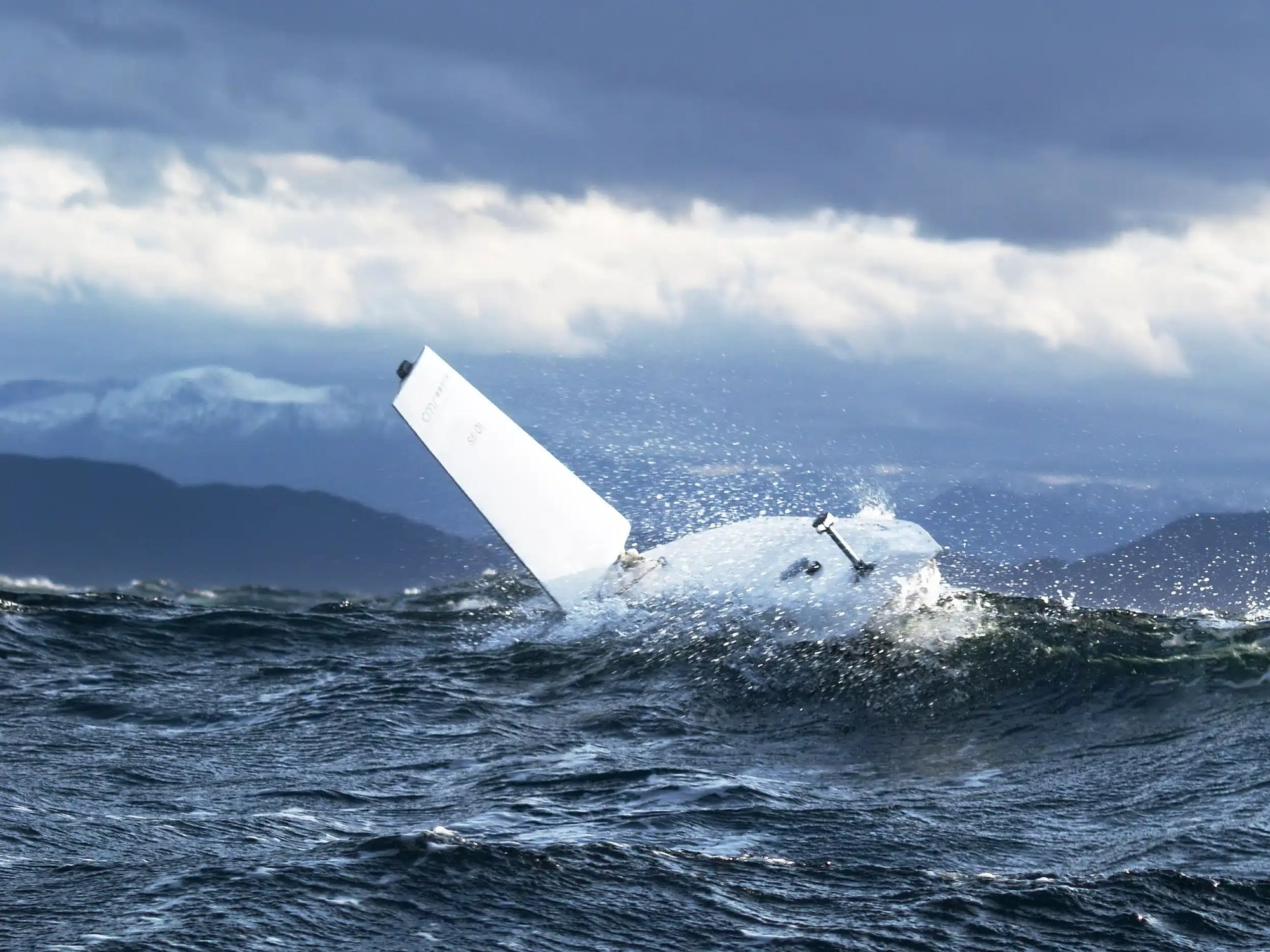
The platform has been operated in winds up to 30 m/s and seas exceeding 14 metres. Arctic winter deployments and a continuous 80-day Atlantic crossing are part of its operational record. It is designed for open ocean conditions.
The echosounder hardware is identical to vessel-mounted systems. For upper water column measurements, Sailbuoy's shallow transducer depth (0.5 m) can reduce the surface blind zone that affects ship-mounted echosounders. Weather-induced bubble interference can affect shallow readings in rough conditions – this is documented in the 2024 ICES Journal paper.
Yes. Reduced-resolution data summaries are transmitted via Iridium satellite during operation. Full-resolution datasets are available after recovery. Transmission options can be tailored to your bandwidth and budget requirements.
Yes. The GLIDER project demonstrated coordinated operation with underwater gliders and wave-powered vehicles. Sailbuoy can also function as a subsea communications gateway, relaying data from underwater instruments to shore via satellite.
Sailbuoy deployments are compatible with research council grants, EU Horizon Europe and Blue Economy programmes, national environmental monitoring budgets, and university research allocations.
USV regulations vary by jurisdiction. We have operational experience in the Southern Ocean, North Sea, Norwegian coast, Baltic Sea, Arctic, and Southern Ocean. We advise on regulatory requirements for your specific operational area.
Talk to our team about your monitoring objectives. We'll help you evaluate whether autonomous surface vehicle deployment fits your programme, and which service model makes sense.